Zonation model for PPP
The Zonation Model for PPP form is opened via the Lithology Model for PPP form. Here, you can observe the various settings related to the Zonation Model. Among these are settings for each zone and segment. The Low, High, and Discriminator values can be controlled from within this view.
Specifying shale discriminators
Specific shale discriminator values can be set for each segment in the Zonation Property Settings table at the top of the view. Click on a row to select that depth segment, and you may then edit the values in the Low, High, and Discriminator Value fields in the Segment Property Settings pane; double-click in the field, type a new value, and press Enter on the keyboard to update the table.
Changing default lithology types
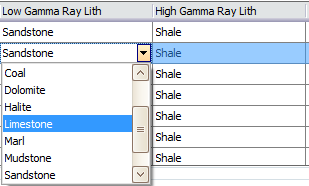
Select lithologies from the drop-down lists click to enlarge
The Zonation Model form shows the settings for the low and high lithologies of the selected segment. You may change the lithology listed in the Low Lith and High Lith columns by clicking in the cell for either column. A drop down menu will appear from which you may select an alternate lithology.
After a new lithology has been selected, and if the Automatic Update lock icon of the zonation calculation in the Lithology Model for PPP form is locked, you will need to click the (Re)Calculate button to update the Lithology Column in the Zonation Model.
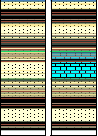
A Lithology Column updated with one of the depth segments changed to Limestone click to enlarge
Selecting zonation manually
When the calculation type on the form is set to Manual, any existing zones can be altered by clicking into the table and modifying the data. When modifying start and stop depths the table values are recalculated when the manual modification causes one zone to overlap another.

Modifying table click to enlarge
In addition to modifying existing zones, new zones can be added through the right-click context menu in the table. Opening the context menu for a specific zone provides the option to add a new, blank zonation above or below the zone. This zone can then be manually populated with data.